
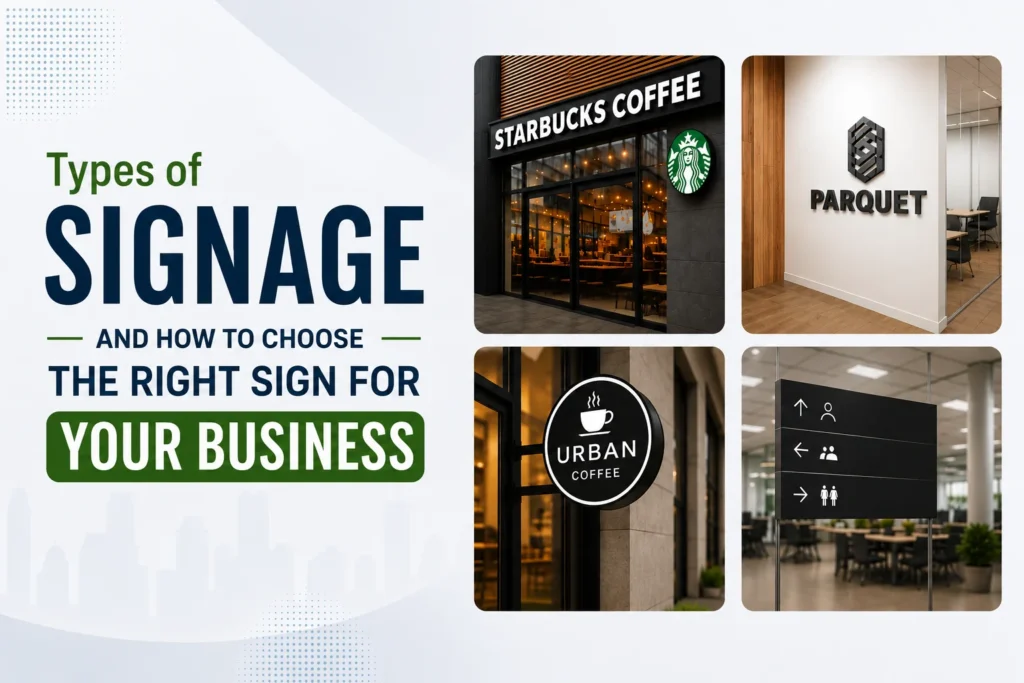
The right sign can introduce your business before a customer ever walks through the door. With so many types of signage available, however, choosing one is not always as simple as picking a design you like. A Dubai shop may need something visible from a busy street, while an office may need a clean sign behind the reception desk. Your location, audience, viewing distance, business hours, and available space all play a part in the decision. In Dubai, signage also has to work with the surrounding buildings and local requirements. That makes it worth understanding your options before moving from design to production.
How the Right Sign Board Helps Your Business Stand Out in Dubai
Dubai is packed with retail stores, restaurants, offices, hotels, clinics, showrooms and commercial buildings. Customers often have several businesses competing for their attention in the same area. Good business signage gives people a quick way to identify your company.
It can display your name from the street, introduce your logo at reception or direct visitors through a large building. The purpose changes from one location to another. A sign on Sheikh Zayed Road needs to communicate from a distance. A shop inside a Dubai mall needs to catch people walking past. An office in Business Bay may place more importance on reception branding and internal directions. Before choosing a sign, think about what you actually need people to see and where they will see it.
Types of Signage Dubai Businesses Can Choose From
There is no single sign that works for every business. Some options are made to attract customers outside, while others work better inside offices and commercial spaces.
Here are some of the most useful options to consider.
1. 3D Signage
3D signage uses raised letters, logos or shapes to give a business name more depth. It can create a strong visual presence without making the design complicated. Acrylic, aluminium and stainless steel are commonly considered for dimensional lettering. The final look can be simple and modern or more prominent depending on the letter depth, material and finish. It works particularly well on shop façades, reception walls, restaurants, showrooms and corporate offices. The important part is scale. Letters that look large on a computer screen may appear quite small once installed across a wide storefront.
2. Acrylic Signage
Acrylic signage offers plenty of design flexibility for indoor commercial spaces. Businesses can use it for logos, reception signs, wall branding, door identification and directories. Clear, coloured, frosted or layered acrylic can create very different results. Raised acrylic letters are also useful when you want more depth than a flat printed graphic. This style is a practical choice for clinics, salons, offices and retail interiors.
For example, a company in a Dubai business tower could use acrylic lettering behind its reception desk without making the wall look overly busy.
3. Backlit Signage
A business can look completely different after sunset. That is where backlit signage becomes useful. Lighting behind the letters creates illumination around or through the sign. It helps the business name remain noticeable in the evening while creating a polished appearance. Restaurants, hotels, cafés and shops that operate after dark may benefit from this format. Lighting should still suit the location rather than overpower it. Dubai regulates elements such as illumination and the presentation of shopfront signage, so the design should be planned with applicable requirements in mind.
4. Metal Signage
For a more solid appearance, metal signage can work across both corporate and commercial settings. Aluminium and stainless steel can be used for letters, logos and identification signs. They produce a noticeably different finish from acrylic and can work well for outdoor applications when the correct material and finish are selected. Dubai’s strong sun, heat and dust should be considered when selecting any exterior sign. Metal letters can suit hotels, property developments, offices and premium retail spaces. Different finishes can also be selected to complement the colours and architecture around the sign.
5. Office Signage
Your branding should not stop at the building entrance. Office signage can identify your company while making the interior easier for visitors and employees to navigate. Reception logos are one common example. Businesses may also need meeting room names, department signs, directories, wall graphics or door identification. Indoor signs do not always need to advertise. They can simply make a commercial space easier to use. This makes office signs especially useful for companies based in large commercial buildings across Business Bay, Downtown Dubai, JLT and other business districts.
6. Shop Signage
Your storefront is often the first physical contact someone has with your brand. Effective shop signage tells people who you are before they enter. Different formats can work here, including dimensional letters, illuminated lettering, acrylic signs, aluminium signs, fascia signs and branded logos. The design needs to work from the customer’s normal viewing position. A small boutique inside a mall has different visibility needs from a roadside showroom in Al Quoz. Keep the company name easy to recognise. Too much text can make a storefront harder to read, particularly when someone only has a few seconds to notice it.
7. Wayfinding Signage
Finding the entrance should not feel like solving a puzzle. Wayfinding signage guides people from one point to another. It becomes particularly useful in large properties where visitors may need to find different floors, departments, parking areas or exits. Directional systems can use arrows, directories, entrance signs, floor numbers and department identification. Hotels, hospitals, shopping centres, warehouses and multi-floor offices in Dubai can all benefit from clear directions. Consistency matters here. Using the same typography, symbols and visual style throughout the building makes directions easier to follow.
How to Choose the Right Types of Signage for Your Business
With all these options available, you may wonder which one actually belongs on your property. The answer starts with your location rather than the sign itself.
Start With Where the Sign Will Go
First decide whether the sign will sit indoors or outdoors. Then look at the exact position. Is it above a storefront? Behind reception? On a building façade? Inside a corridor? Near a car park entrance? A reception wall needs a very different design from an exterior sign viewed from the road. Once the location is clear, you can narrow down the material, size and lighting options.
Think About How Far Away People Will Be
Viewing distance can completely change a design. Someone walking through a mall can read relatively small lettering. A person viewing a building from across a wide road cannot. Larger viewing distances usually call for simpler layouts and more readable lettering. Do not try to squeeze your full marketing message onto the sign. For most business identification signs, the company name and clear branding should do the main job.
Decide Whether You Need Night Visibility
Ask yourself when customers usually see your business. A corporate office operating mainly during the day may not need illuminated exterior letters. A restaurant or retail store trading into the evening has different needs. An approved illuminated sign can keep the business name visible once natural light drops. Operating hours should therefore be considered before deciding between non-lit and illuminated options.
Pick Materials for Dubai Conditions
Material selection is particularly important for outdoor signage. Dubai’s heat, direct sunlight and dust can be demanding on exterior installations. Outdoor materials and finishes should therefore be chosen for the actual installation environment rather than appearance alone. Acrylic may suit one design, while aluminium or stainless steel may work better for another. Indoor signage gives you more flexibility because it does not face the same environmental exposure.
Match the Sign to Your Business
Your business type gives you another useful clue.
- A corporate office may benefit from reception lettering and room signs.
- A restaurant may need illuminated identification and menu displays.
- A hotel could require building identification alongside directional signs.
- Retail stores can combine storefront lettering with window graphics.
- Warehouses may place greater importance on building identification and directions.
Zahrat Al Madina Printing can help businesses compare different signage formats through our sign board solutions in Dubai, making it easier to choose an option based on the installation space, viewing distance, brand style and how customers will see the sign.
Keep Your Brand Easy to Recognise
Your sign should still look like your business. Use your established logo, colours and visual identity where possible. At the same time, remember that a sign needs to remain readable. A complicated logo may need adjustments when produced as small dimensional lettering. Very thin fonts can also become difficult to read from a distance. Good signage design finds a balance between brand style and practical visibility.
Consider the Space Around Your Sign
Do not judge a sign in isolation. Look at the wall, storefront or building around it. A huge sign squeezed into a narrow fascia can look awkward. A tiny logo across a large façade can disappear. Measure the available installation area and consider nearby windows, doors, architectural features and other signs. This becomes especially important in malls and shared commercial buildings where businesses may have defined areas available for their signage.
Which Sign Works for Different Dubai Businesses?
There is no need to choose the most elaborate option available. Choose the one that solves the actual visibility or navigation problem.
|
Business Type |
Sign Options to Consider |
|
Retail shop |
Shop signs, 3D letters, window graphics |
|
Restaurant |
Backlit signs, light boxes, menu displays |
|
Corporate office |
Acrylic signs, reception logos, directories |
|
Hotel |
Building signs, directional signs, room signs |
|
Clinic |
Reception signs, directories, door signs |
|
Warehouse |
Exterior identification, directional signs |
|
Showroom |
3D letters, illuminated logos, window graphics |
|
Exhibition booth |
Backdrops, banners, display signs |
These combinations are starting points rather than fixed rules. The final choice should reflect the property, brand and viewing conditions.
Check Dubai Signage Requirements Before Installation
Do not leave approvals until after the sign has been manufactured. Signage requirements in Dubai can vary according to the sign format, location and relevant jurisdiction. Different authorities or development zones may have their own approval procedures.
Building management or mall requirements may also affect what can be installed. Factors such as dimensions, placement, illumination and language can matter for shopfront advertising.Checking the applicable requirements early can prevent a design from reaching production before an important restriction is discovered.
Turn the Right Sign Into Part of Your Brand
The best business sign is not necessarily the biggest or brightest one. It is the sign that works for the space, remains readable and represents the company clearly. Start by deciding what you need the sign to achieve. Then consider where people will see it, how far away they will be and whether they will see it during the day or at night.
Zahrat Al Madina Printing works with businesses that need signage for shops, offices, showrooms and commercial spaces across Dubai. Our sign board solutions in Dubai cover 3D, acrylic, backlit, metal, office, shop and wayfinding signage, with design, production and installation managed in-house. This gives businesses different options for choosing a sign that suits their branding, available space and installation location.
If you are comparing different types of signage, Zahrat Al Madina Printing can help you decide which format fits your business space before moving ahead with production.
FAQs
What Are The Most Common Types Of Signage For Businesses?
Popular options include 3D signs, acrylic signs, backlit signs, metal letters, shop signs, office signs and wayfinding systems. The right format depends on where it will be installed and what information it needs to communicate.
Which Signage Is Best For A Shop In Dubai?
Shopfront lettering, 3D signs and illuminated signs can all work well. Your storefront size, viewing distance, business hours, brand style and applicable building requirements should guide the final decision.
Is Backlit Signage Suitable For Dubai Businesses?
Backlit signs can work particularly well for businesses that need visibility after dark. Restaurants, cafés, retail stores, hotels and other evening businesses may consider this option where permitted.
Which Material Should I Choose For Outdoor Signage?
Acrylic, aluminium and stainless steel are among the materials businesses may consider. Outdoor signs in Dubai should account for direct sunlight, heat, dust and the conditions at the installation site.
Do Businesses Need Approval For Signage In Dubai?
Signage approval requirements can depend on the location, sign format and jurisdiction. Businesses should check the requirements that apply to their premises before manufacturing and installation.